

I put the NUX B-7PSM — the standard personal-monitor model, not the Pro — on the team for a full month of rehearsals and two live services before writing a word about it, because a first-impression gear review is basically a press release with extra steps.
The category is packed right now — every gear brand has a “budget” wireless option chasing the same crowd that got priced out of the professional systems years ago. This one landed in that price range where you’re clearly buying “good enough,” not “best in class,” and I wanted to know exactly what “good enough” actually gets you.
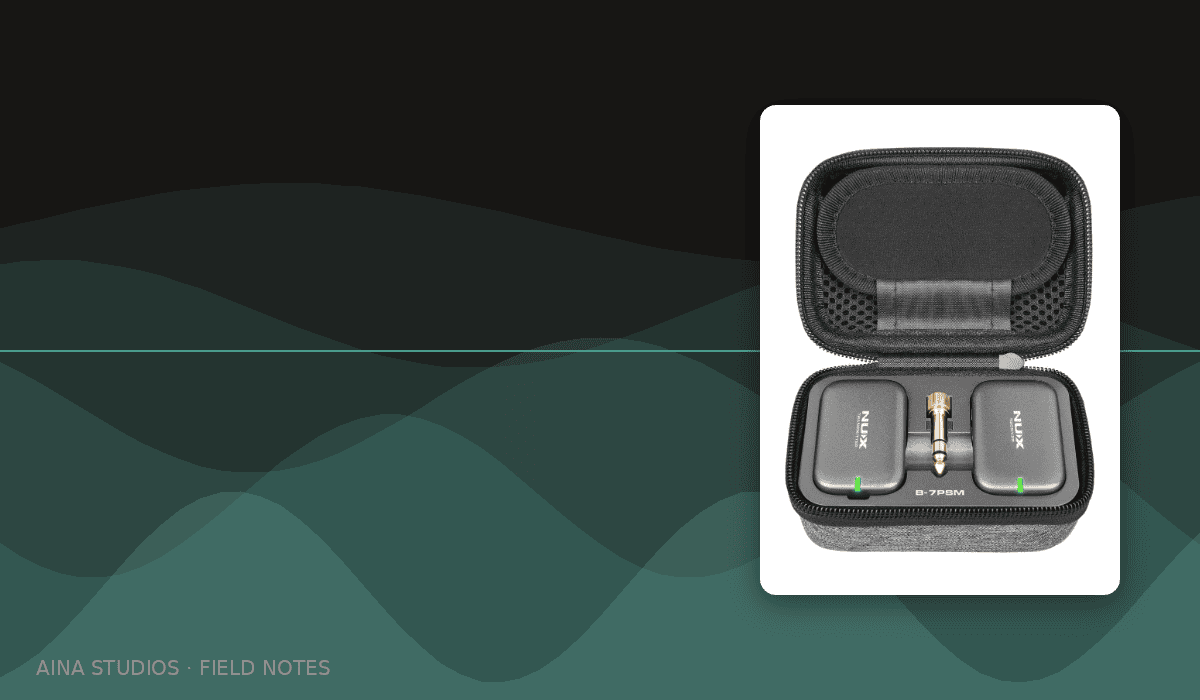
What held up: RF stability was the real surprise. I expected dropouts in a room with this much wireless traffic already competing for spectrum, and across a month of use I had exactly one glitch, during a tech rehearsal, that I couldn’t even reproduce on a retest. For the price, that’s a legitimately good result. Battery life matched the spec sheet, which sounds like a low bar until you remember how often it isn’t true.
What didn’t: The onboard limiter is aggressive in a way that isn’t adjustable enough. Push a hot mix and it doesn’t compress so much as flatten, and you can hear it happen in real time — dynamics just disappear. That’s a real limitation if your mixer likes to run in-ears hot, which, let’s be honest, most of us do at some point in a set.
My real complaint is fidelity, not RF: sound does degrade a bit going wireless on the B-7PSM versus a wired connection, or versus a higher-end system. On stock earpieces it’s subtle enough that most people won’t clock it. I run custom 6-driver IEMs, though, and on those it’s easy to hear — the B-7PSM takes a little resolution off the top compared to running the same in-ears wired. The more resolving your ears are, the more of that gap you’ll notice.
The frequency response is also noticeably scooped — present low end, present highs, a dip in the low-mids that makes vocals sound thinner than they do on a reference system. Fine for a click and a rough mix reference. Less fine if someone’s trying to actually judge their vocal tone through it.
The actual verdict: for a rehearsal system, a backup system, or a smaller room where you’re not pushing extreme SPL into the ears, this earns its spot. For a front-line, every-week, this-is-what-the-artist-trusts-their-pitch-to system — especially if you’re running higher-end custom in-ears that will show you everything you’re giving up — I’d still spend the extra money on something with a cleaner limiter and flatter response. It’s not a bad product. It’s a product doing exactly what its price point promises, which is rarer than it should be.
Buy it knowing what it’s for, and it’ll earn its keep. Buy it expecting it to replace a $2,000 system, and you’ll be writing your own disappointed review in a month.
Gear in this post
NUX B-7PSM wireless in-ear monitoring system — check the current price on Amazon
Heads up: that’s an affiliate link. If you buy through it, Aina Studios earns a small commission at no extra cost to you — it helps keep this training free.